Painting & Drywall Repair: When to Call a Pro in Northern Virginia
By Brandon Mayernik · June 12, 2026
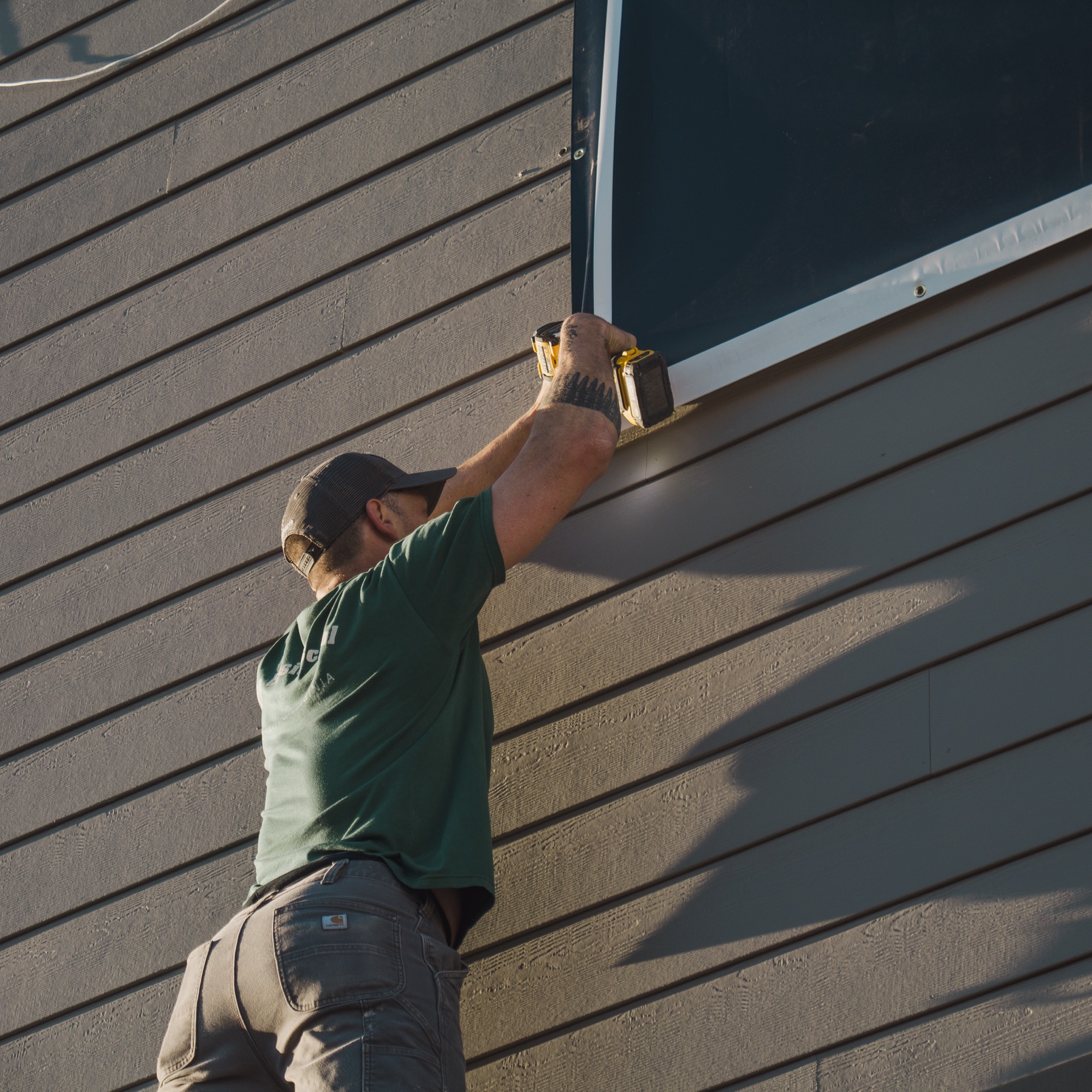
Most painting and drywall calls start the same way: "I tried to patch it, but you can still see it."
That's the moment paint and drywall stop being a Saturday DIY and start being a job. The patch isn't the hard part. The hard part is making it disappear — feathering the edges so the eye doesn't catch the bump, matching the texture so the wall reads as one continuous surface, and rolling paint so the sheen lines up under the kitchen lights at 8pm.
That's where VHS lives. We sit between the handyman who shows up with one roller and the contractor who quotes $8,000 to repaint a townhouse. If your list is a few rooms, a few patches, an accent wall, or a punch-list of dings — that's a day-block job.
Here's how to know what fits, and what to expect.
Where DIY Usually Breaks Down
There are four places homeowner paint and patch jobs go sideways. None of them are about effort. They're about technique.
1. Feathering the mud. A patch isn't done when it's flat — it's done when the edges are sanded so thin you can't feel the transition with your hand. Most DIY patches stop one or two sanding passes too early. Under a wall sconce or morning sunlight, the halo around the patch shows up clearly.
2. Texture matching. Northern Virginia builders used three main textures: knockdown (the most common, mid-2000s homes), orange peel (a lot of the late-90s stock in Fairfax and Burke), and smooth (older Vienna and Mount Vernon homes, plus most newer builds). Each one has its own technique. Spraying the wrong knockdown pattern over an orange-peel wall reads as obviously patched.
3. Color match. "Just match the existing white" is a sentence that has cost a lot of homeowners a second gallon. Whites drift. Sun fades them. The leftover paint in the basement is a different sheen than what's actually on the wall. We usually take a chip to the paint counter and have it scanned, then test it before committing.
4. Sheen consistency. Roll a touch-up over a flat wall with a fresh roller and you'll see the patch from the doorway. Sheen is built up by the original rolling pattern, and it has to be matched — not just the color.
What Fits a Half-Day Block
A half-day (~4 hours, 1–3 tasks) is the right block when the painting and drywall work has a clear shape:
- A drywall patch and one wall of paint. Common after a TV mount move, a doorknob hole, or a wall-anchor pull-out. Patch, prime, two coats, clean up.
- An accent wall in one room. Prep, tape, cut in, two coats. Color already chosen, paint already in your garage.
- A handful of nail-hole patches plus touch-up. The "we're selling the house" list. We come in with a quart of your existing color and make it all go away.
- A single room's worth of trim or door touch-up. Sand, prime spots that need it, two coats on trim.
Recent jobs in Northern Virginia that fit this block included a Stafford accent wall in a primary bedroom, a Burke nursery patch-and-repaint after a closet system came down, and a Fredericksburg living room with five drywall dings the previous owners left behind.
What Fits a Full-Day Block
A full-day (~8 hours, 5+ items or one substantial project) is the right block when:
- A full room of paint, top to bottom. Walls, ceiling, trim, doors. Prep, tape, cut in, two coats on everything.
- Multiple drywall repairs across the house plus a touch-up pass. Move-in or move-out lists.
- An accent wall plus the rest of the room repainted to match. Common — the accent wall makes the existing walls look tired.
- A crack repair that needs mesh tape, mud, sand, prime, and paint. Settling cracks in older homes are a half-day in themselves before you ever pick up a roller.
A full-day for a single bedroom isn't overkill. It's prep, two coats with proper dry time between, and a real cleanup. Anyone telling you they painted a room in two hours either didn't prep or didn't do a second coat.
Why We Hand-Roll Residential
People ask whether we spray. For residential interior — almost never. Spraying makes sense on new construction or a totally empty room with nothing to mask. In a lived-in house, the time you save spraying gets spent on twice the masking, and the finish on a smooth wall reads less consistent than a properly rolled wall. Hand-rolling also keeps the sheen pattern matching the existing walls if we're patching into an existing finish.
The exception is doors, cabinet faces, and trim where a fine-finish HVLP makes sense and we can pull and set up off-site.
NoVA Quirk: Plaster Under Drywall
If your home was built before 1970 — common in older Vienna, Mount Vernon, parts of McLean, and a chunk of historic Fredericksburg — there's a decent chance you have plaster walls, or plaster underneath a drywall skim. Two things to know:
- Anchors behave differently. A standard drywall anchor in plaster will pull right out. Plaster needs a toggle or a wood-screw into the lath behind it.
- Patching is a different process. You're either patching with setting-type compound (not joint compound) or you're cutting back to the lath and bridging with drywall. Sanding plaster also kicks up more dust and we mask differently.
This is the kind of thing that turns a "quick patch" into a real job. Worth knowing before you swing a hammer.
A Quick Scope Cheat Sheet
| Project | Block |
|---|---|
| Single accent wall, paint on hand | Half-day |
| Drywall patch + repaint one wall | Half-day |
| Nail-hole touch-up + one room paint | Half-day |
| Full bedroom: walls, ceiling, trim, doors | Full-day |
| 3–5 drywall repairs across multiple rooms | Full-day |
| Crack repair + full room repaint | Full-day |
| Whole-floor punch list (move-in/out) | Full-day or multi-day |
If the list runs past a full day, that's usually Refresh territory — a project-quoted job rather than a day block. The line between "handyman paint and patch" and a "refresh" is usually whether new finishes are involved.
When You're Ready
The cheapest paint job is the one done right the first time. The most expensive is the one where you can still see the patch and have to call someone back to fix it.
If you've got a list of patches, an accent wall, or a room that needs to look new again, send it over via the Handyman Day Request form. Tell us what's on the walls now, what you want it to look like, and we'll tell you honestly whether it's a half-day, a full-day, or something bigger.
Picture your finished room
Walk through your room, your style, and what stays or goes. We come back with a personalized plan and quote within 24 hours — no pressure, no obligation.
Start the Refresh DesignerReady to Get Started?
Get a free, no-obligation quote for your project. We typically respond within the hour.